
The overlap of the fronts
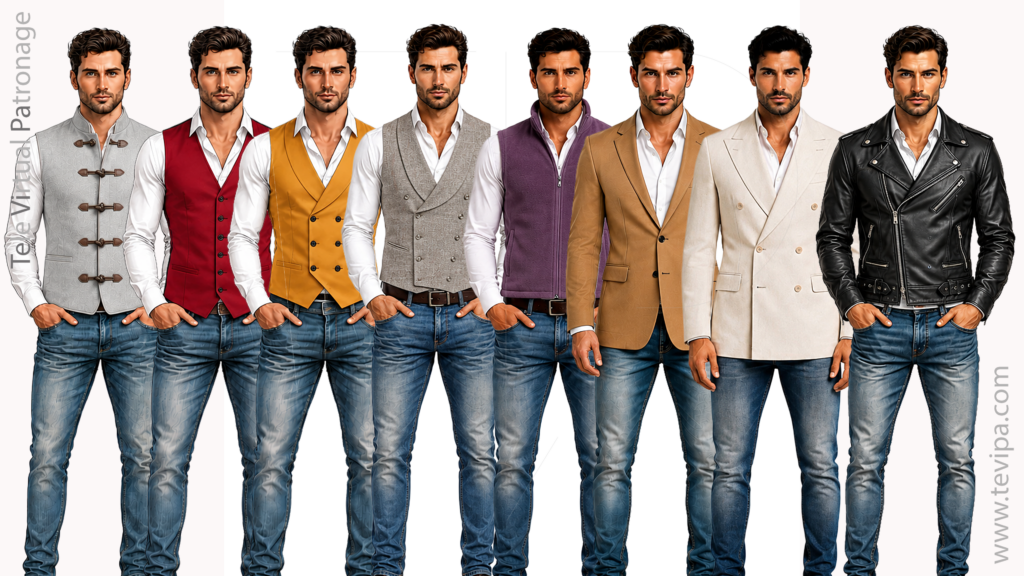
Many upper garments have a fastening system. Generally on the front. The most common types of fastening are frogs, buttons, or zippers.
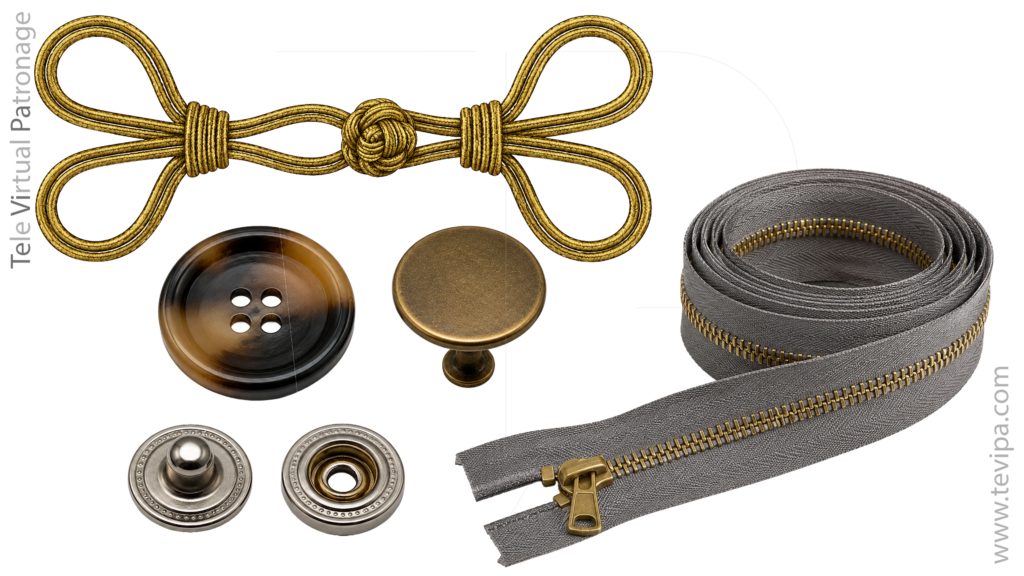
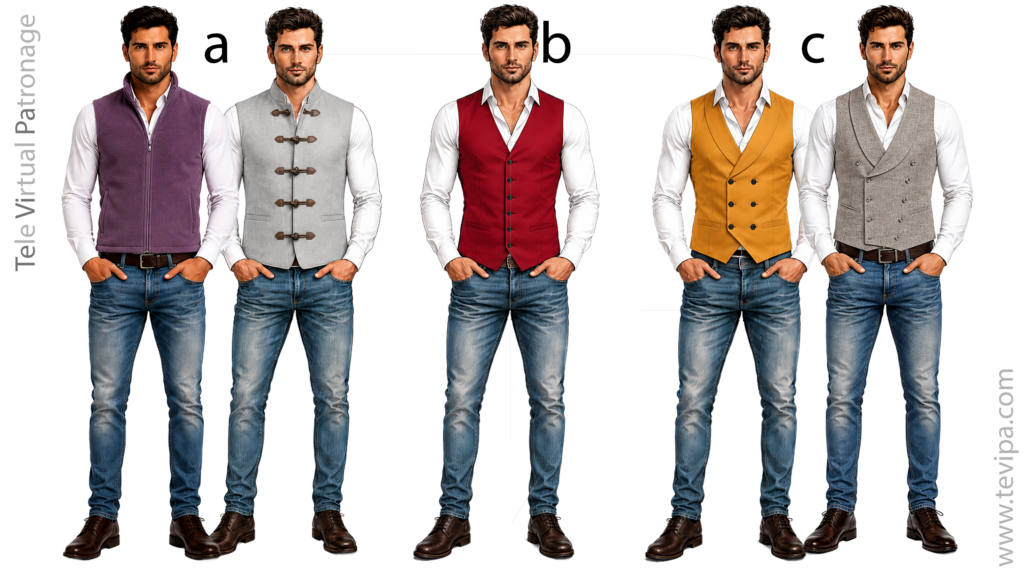
According to the fastening style of upper garments, we can distinguish between edge-to-edge garments (a) , single-breasted garments (b), and double-breasted garments (c).
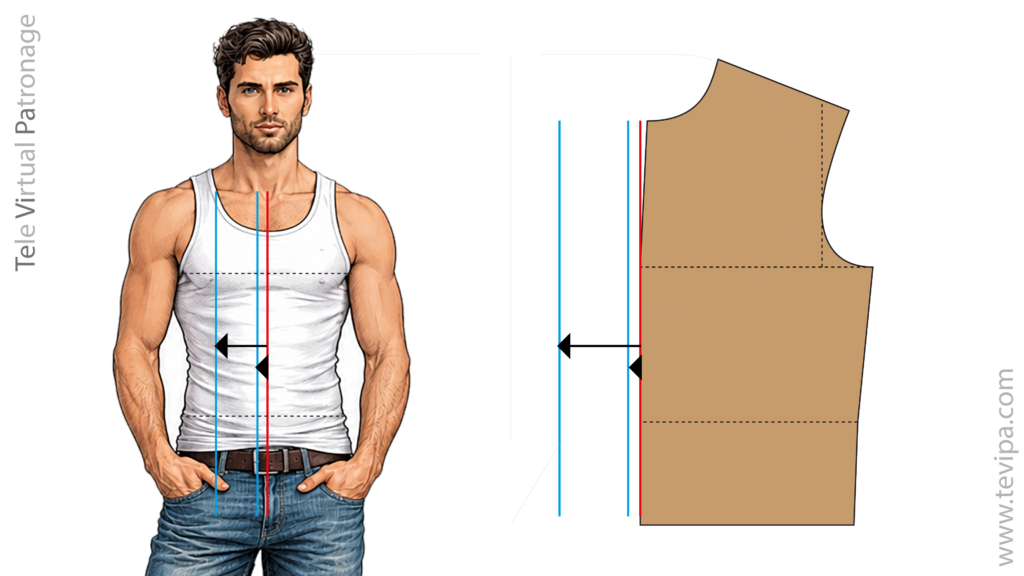
According to the fastening method of upper garments, we need a margin to keep the garment closed.
The edge allowance is the extension we add from the center front axis to the front edge.
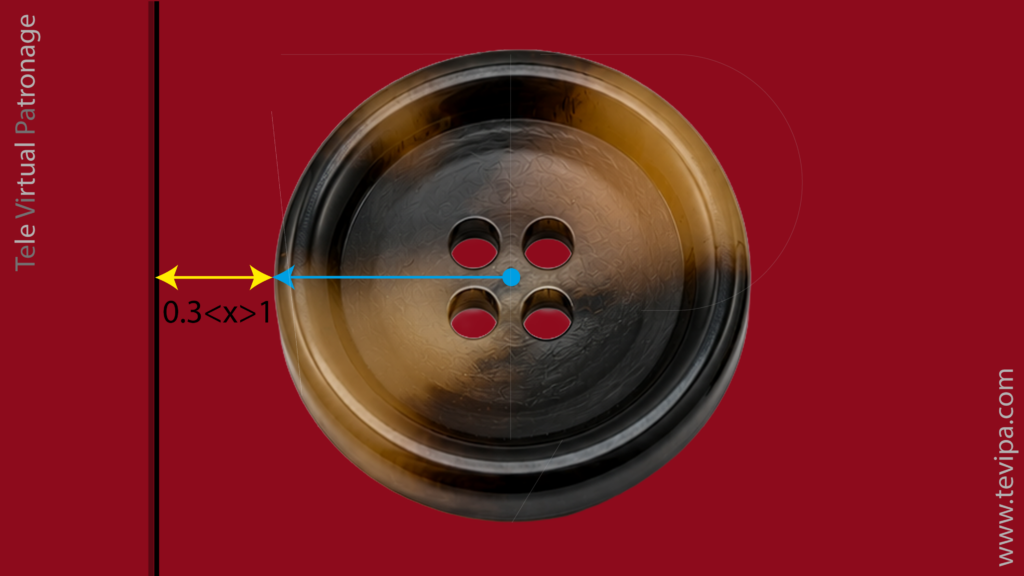
For example, in the case of a button fastening, we need a margin equal to the radius of the button, plus an extension from the edge of the button to the edge of the garment. We call this extension button allowance.
The button allowance can vary from three millimetres to one centimetre, depending on the thickness of the fabrics used. This margin can also vary according to the style of the garment.
In garments fastened with frogs or zippers, the edge allowance does not exist.
The front edge can meet edge to edge or overlap. The overlap may correspond only to the edge allowance or exceed that allowance.
If the overlap of the front edges exceeds the edge allowance, we say that the garment is double-breasted.
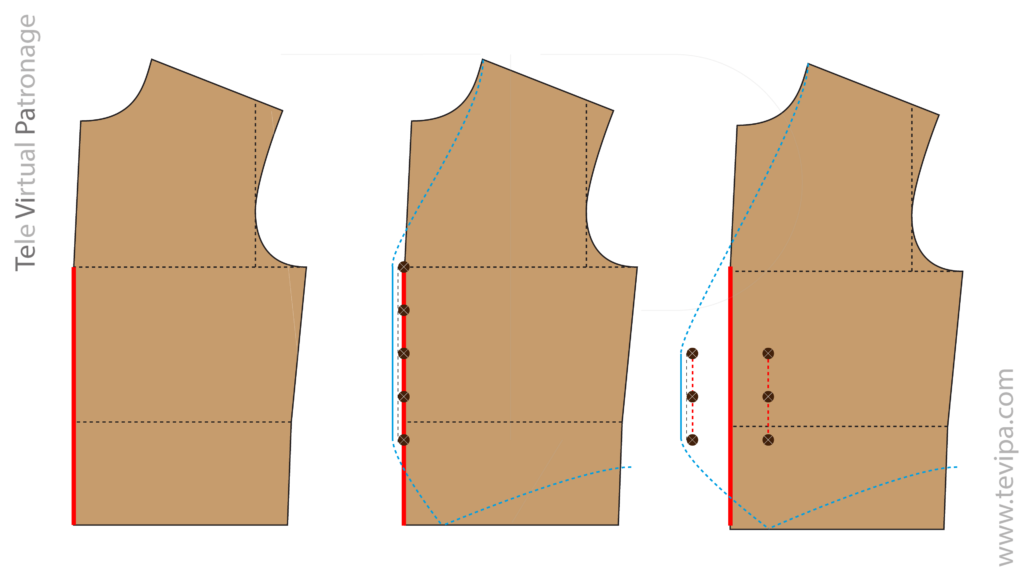
The overlap can be parallel to the center front axis or oblique.
If the overlapping front is parallel, we will call it a straight or symmetrical overlap; if it is oblique, we will call it an asymmetrical overlap.
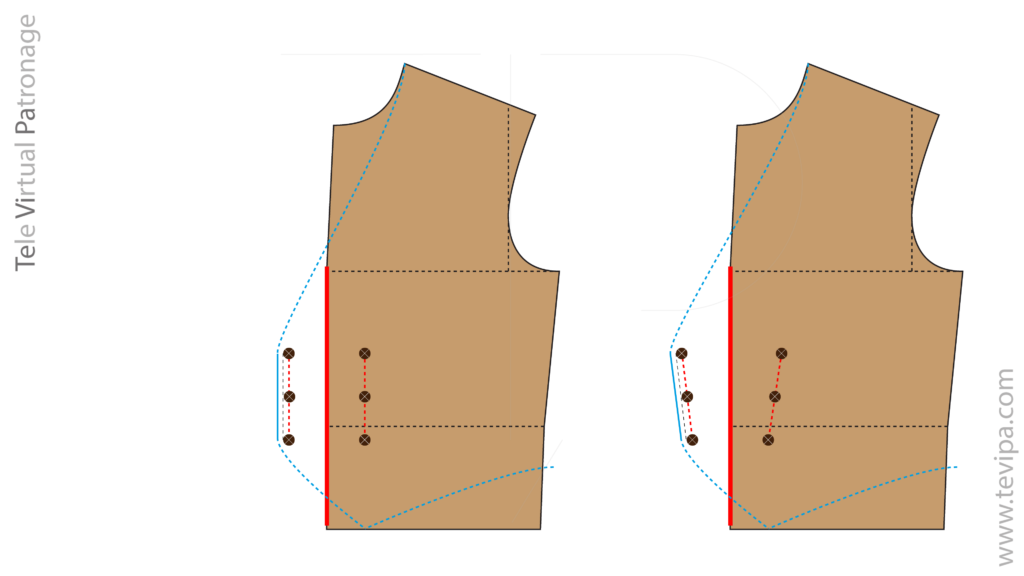
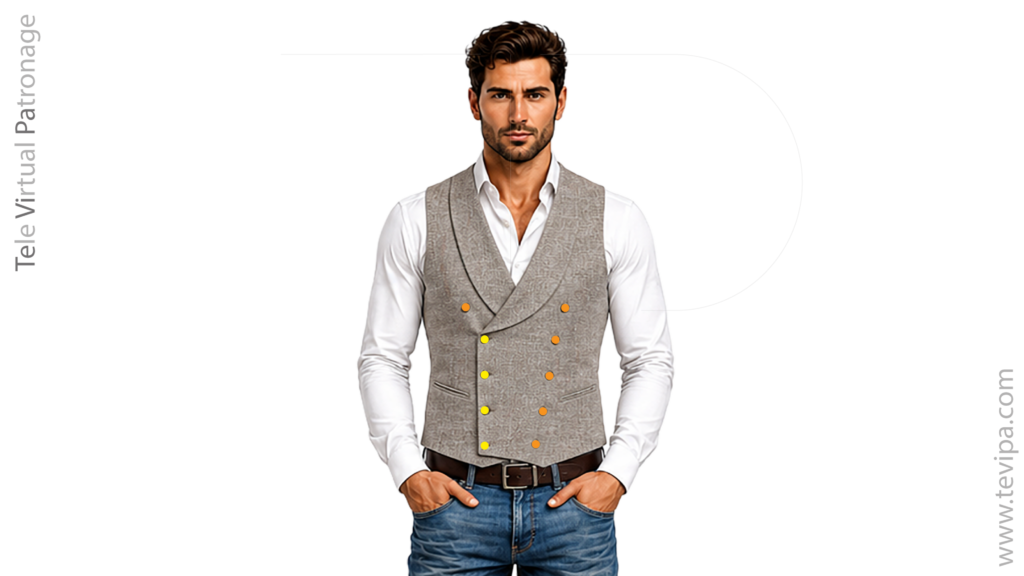
The overlapping front —also called double-breasted— is generally closed with buttons.
In most cases, the buttons are arranged symmetrically in relation to the axis of symmetry. We will classify the buttons of these garments as functional buttons and decorative buttons.
Functional buttons (yellow) allow the garment to be closed, while decorative buttons (orange) are purely ornamental.
Some overlapping upper garments are closed with a zipper or with frog fastenings. One example is the biker jacket.