
Casual jackets
classification and patternmaking logic
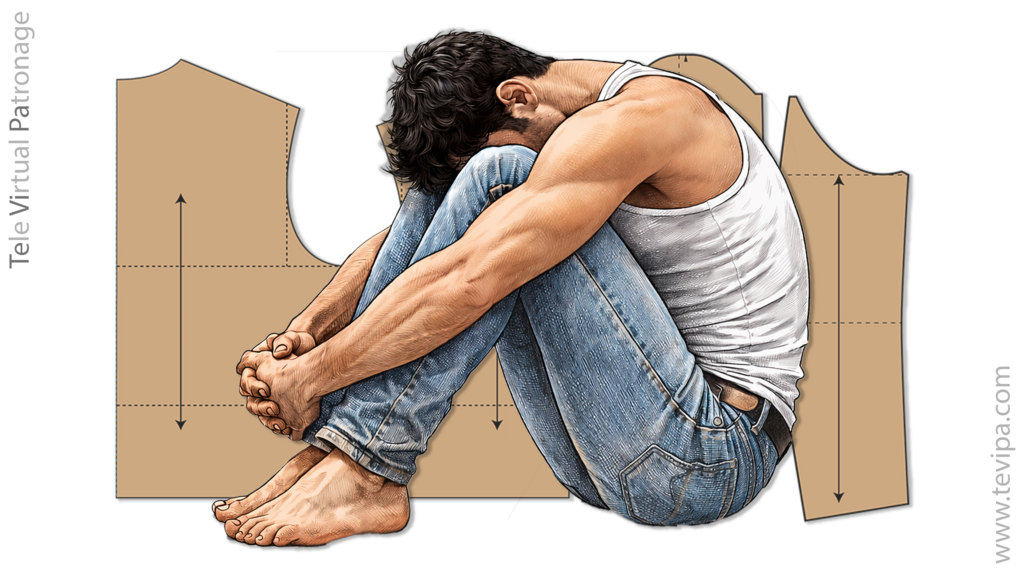
The casual jacket is a short outer garment that sits at the waist or slightly below, without extending significantly past the hip line. It covers the torso while allowing freedom of movement in the arms.
It features a relatively simple construction, with a full front closure and no long skirt sections, clearly setting it apart from garments such as the tailored jacket or the coat.
From a technical standpoint, the casual jacket works as an action garment: it incorporates fitted cuffs, elastic waistbands or closure systems that enhance mobility and adapt to the body.
Unlike classic tailoring garments, it uses a less rigid structure, and its performance depends more on use, context and fabric type.
The casual jacket moves with the body.
Iconic jackets
The bomber
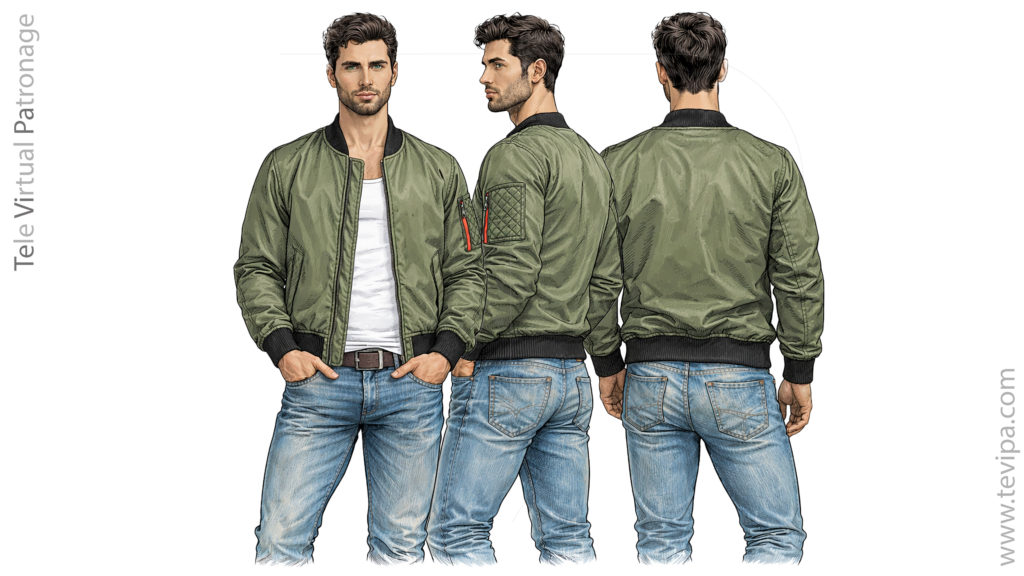
Volume and tension define its behavior.
The bomber comes from military use and performs in flight conditions. Its compact construction and controlled fit explain how it works.
It uses a contained silhouette, concentrating volume in the torso and regulating it through elastic elements.
Ribbing at the collar, cuffs and hem defines its most distinctive feature: it pulls the garment in at the edges and blocks air entry, creating a slightly ballooned shape.
In patternmaking terms, it relies on a block with medium to high ease in the body, especially at the chest and armhole, allowing movement and layering. Elastic elements control this ease.
The sleeve is usually wide, often raglan or with a low sleeve cap, allowing greater mobility.
The front closure uses a zipper, usually without a placket. The collar stays low and fitted, without lapels.
In terms of function, it does not aim to structure or elongate the silhouette, but to create controlled volume.
The bomber does not follow the body — it wraps around it and controls it through tension at the edges.
The aviator (shearling)
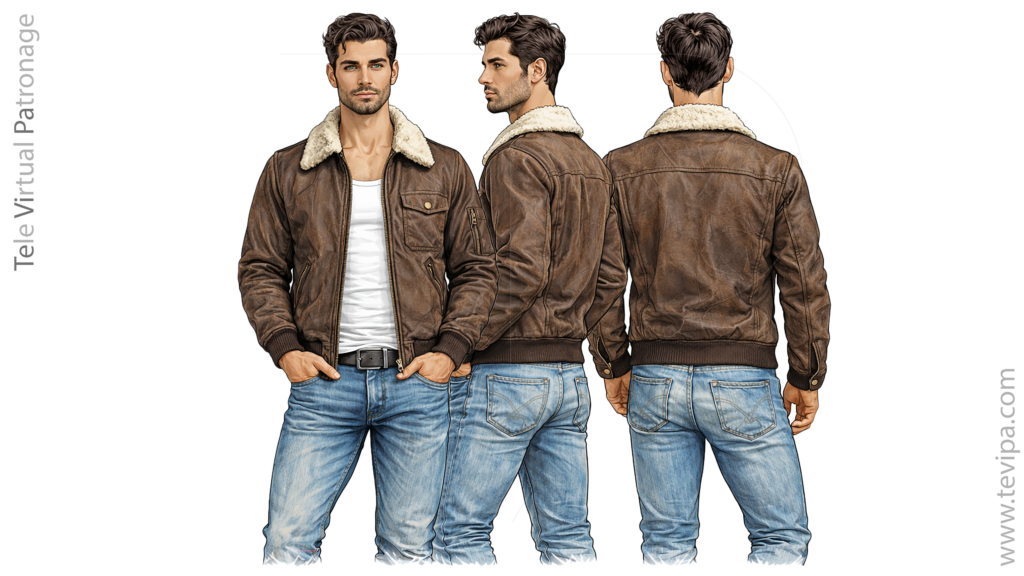
Insulation and volume define it.
The aviator handles extreme conditions, where thermal insulation takes priority.
It uses thick materials such as shearling, adding weight, volume and thermal capacity. A wide, often lined collar reinforces its identity.
In patternmaking terms, it uses generous ease at the torso and armhole, creating an air layer that acts as insulation.
The sleeve stays wide, allowing movement even with bulky inner layers.
The front closure uses a zipper, sometimes with additional adjustment systems, always subordinated to thermal function.
In terms of function, it does not aim to follow the body closely or move lightly with it.
The aviator does not move with the body — it isolates it from the environment.
The short parka
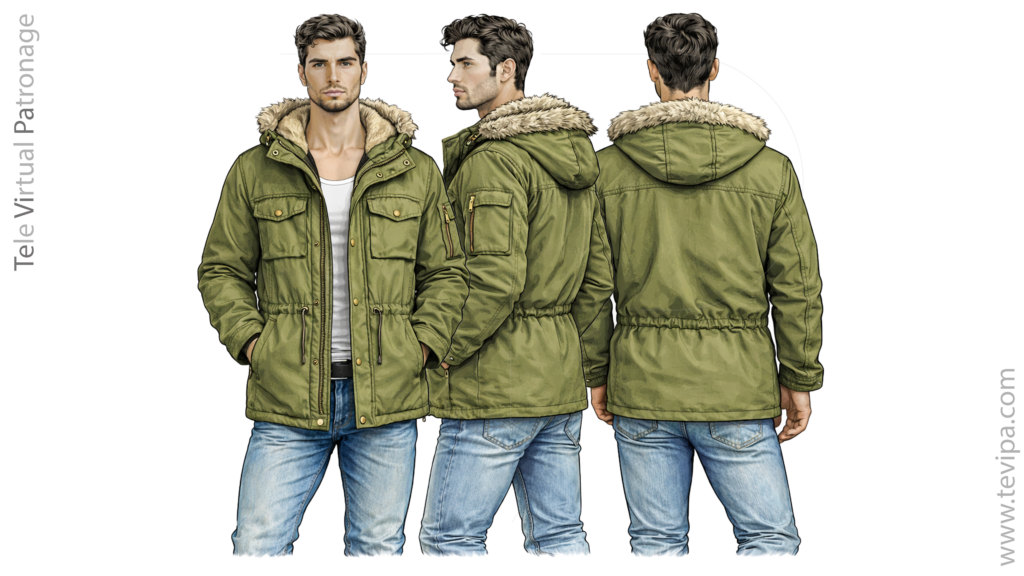
Protection and regulation define it.
The short parka protects against the weather by combining insulation, functionality and adaptability.
It uses durable fabrics, along with a hood and cargo pockets.
In patternmaking terms, it starts with medium to high ease, allowing layering without excessive bulk.
Unlike the bomber, it controls its shape through adjustment systems such as drawstrings at the waist and hem.
The closure combines a zipper and a placket. Cuffs usually adjust with Velcro or similar systems.
The parka does not impose a shape — it regulates it according to need.
The windbreaker
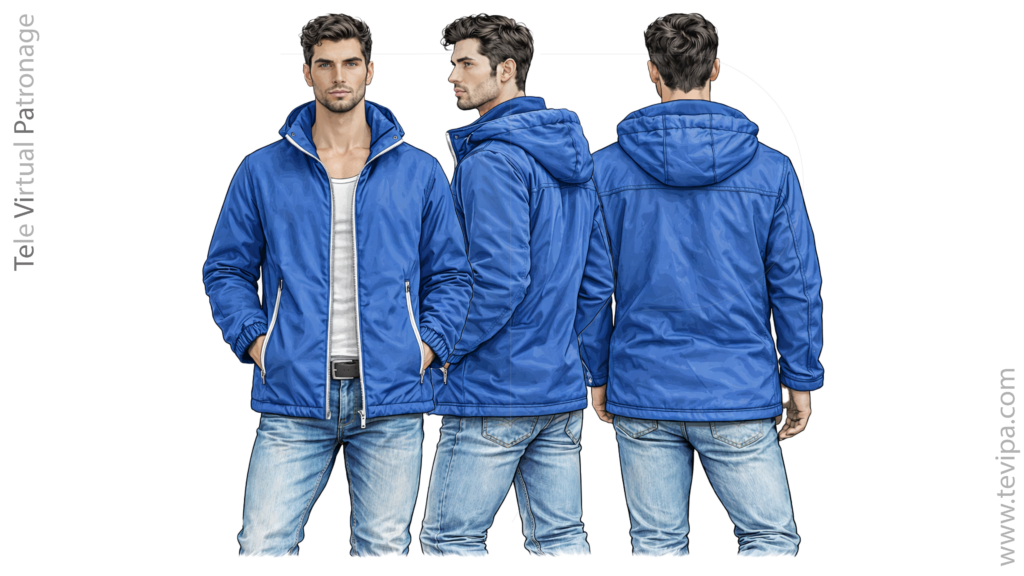
Lightness and compressibility define it.
The windbreaker protects against wind and light rain using a lightweight technical structure.
Very light, packable materials define how it performs.
In patternmaking terms, it uses limited ease and a silhouette close to the body, without structure.
The closure uses a zipper without a placket. The hood stays simple or integrated.
The windbreaker does not insulate or structure — it protects without drawing attention.
The track jacket
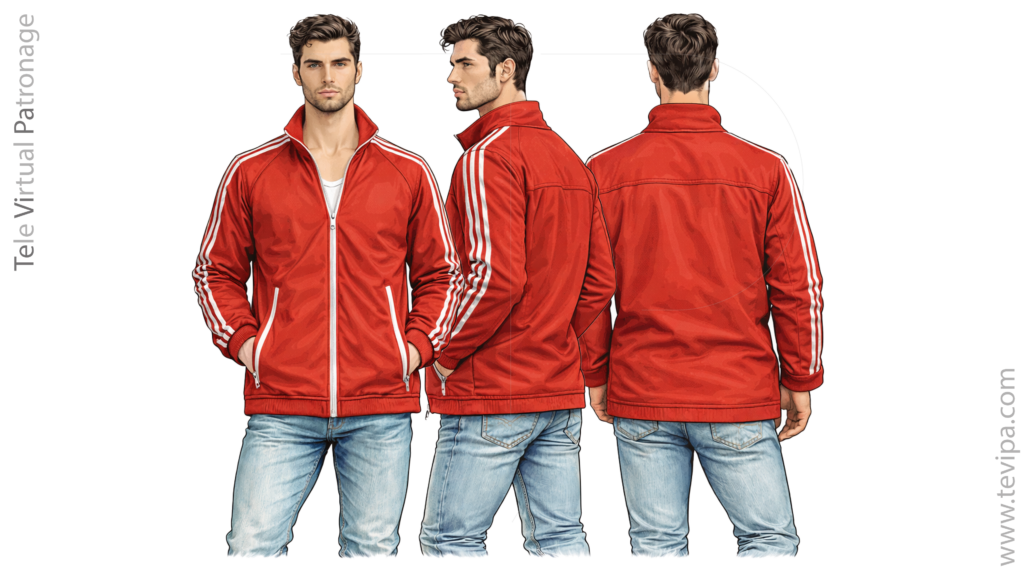
Fit and movement define it.
The track jacket started as sportswear and now belongs to everyday use.
It uses medium or semi-fitted ease, allowing movement without compressing the body.
The sleeve is usually two-piece or raglan, designed for repetitive movement.
The closure stays central with a zipper. The collar remains high, chimney-style.
Lightweight, flexible and breathable fabrics define its construction.
The track jacket balances fit and mobility without adding volume.
The softshell
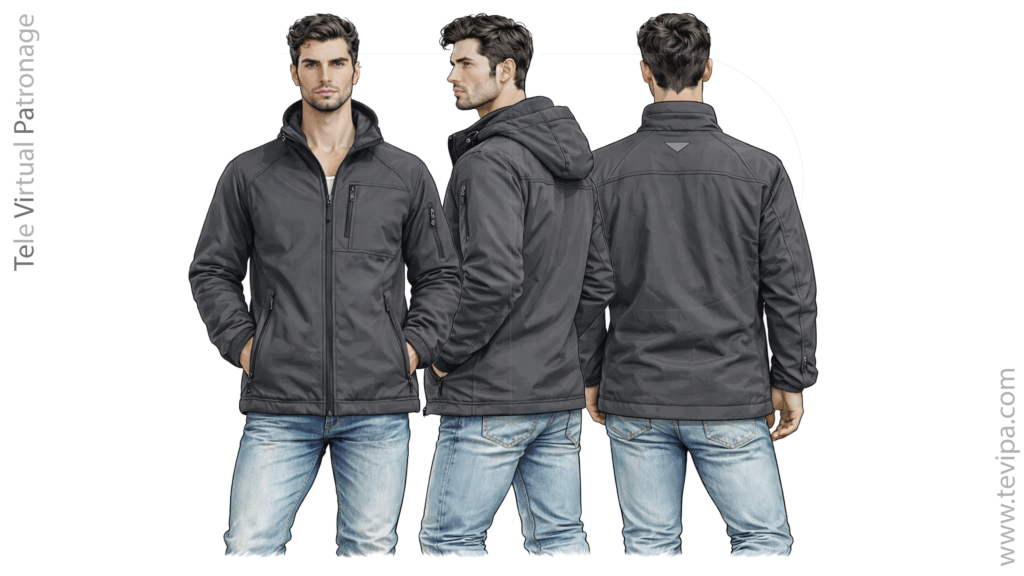
Mobility and airflow define it.
The softshell sits between a lightweight garment and an insulating one.
Multi-layer technical fabrics combine wind resistance, water repellency and elasticity.
In patternmaking terms, it uses a relatively fitted silhouette with controlled ease.
The sleeve construction often follows ergonomic lines, supporting arm movement.
It manages the exchange between body and environment while maintaining control.
The softshell does not add volume — it adapts and responds to the body in motion.
The biker (perfecto)
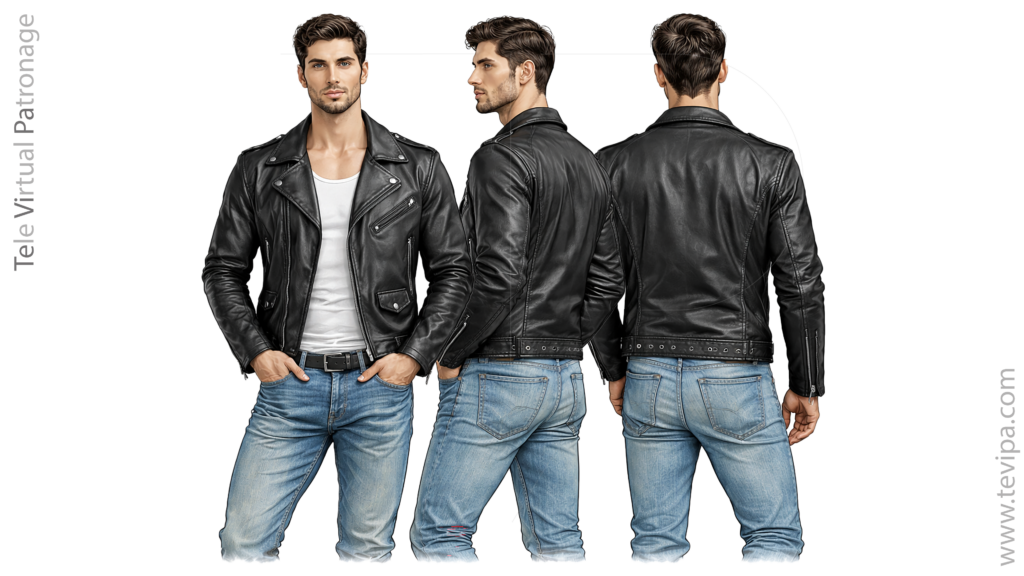
Structure and protection define it.
The biker serves riding conditions.
It uses leather and an asymmetrical front closure.
In patternmaking terms, it builds a fitted silhouette with a structure adapted to the riding position.
The sleeves usually incorporate curvature to facilitate arm flexion.
The biker does not follow the body — it positions and protects it in action.
The café racer
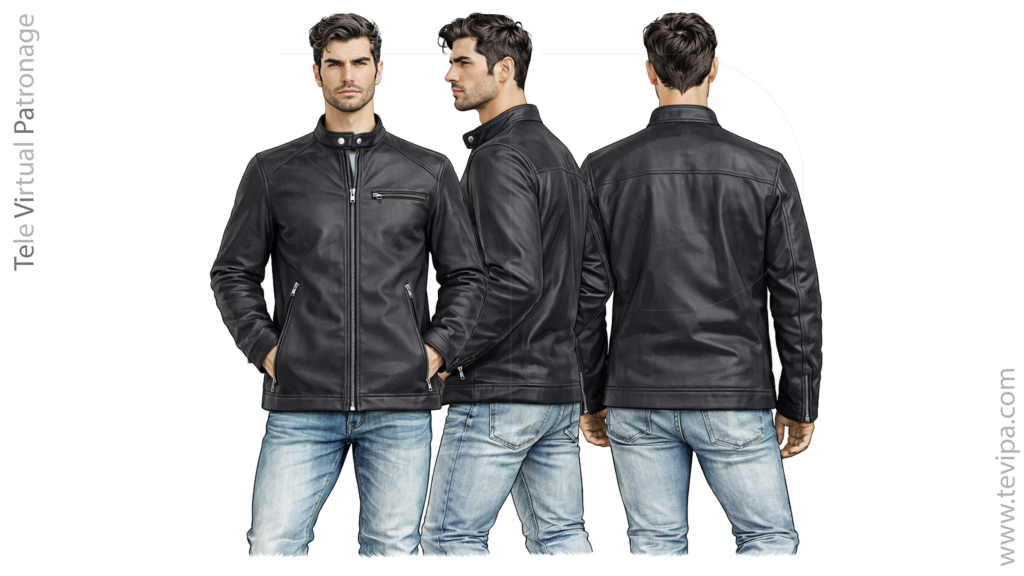
Simplicity and precision define it.
The café racer reduces the garment to its essentials.
It uses a clean construction, without lapels and with a central closure.
In patternmaking terms, it builds a fitted silhouette that minimizes volume and interference.
The café racer removes everything unnecessary, leaving only what matters.
The Harrington
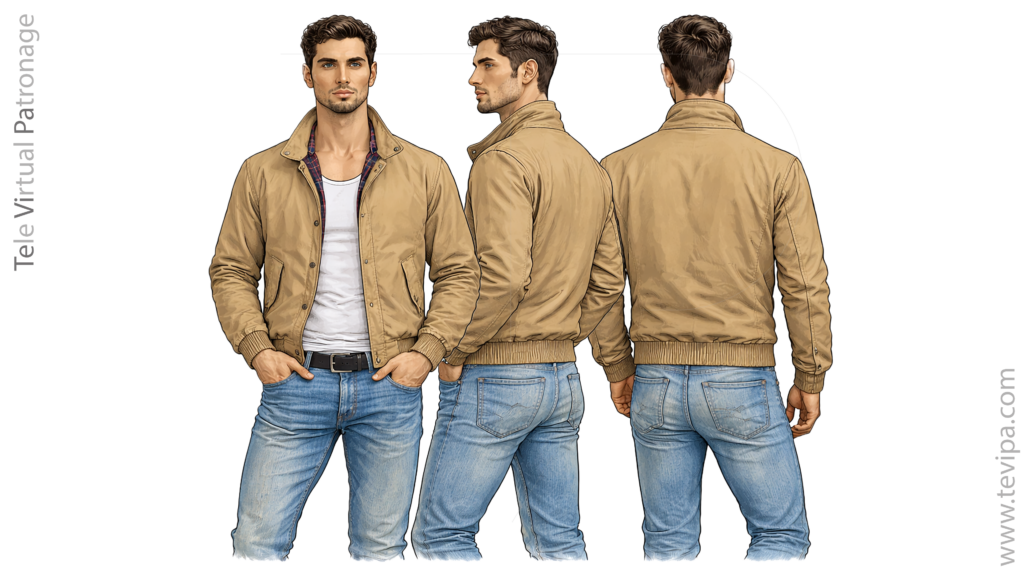
Balance and clarity define it.
The Harrington works as an everyday jacket.
It uses a shirt collar and a clean construction.
In patternmaking terms, it relies on moderate ease regulated by elastic elements.
It balances form and freedom without losing identity.
The trucker
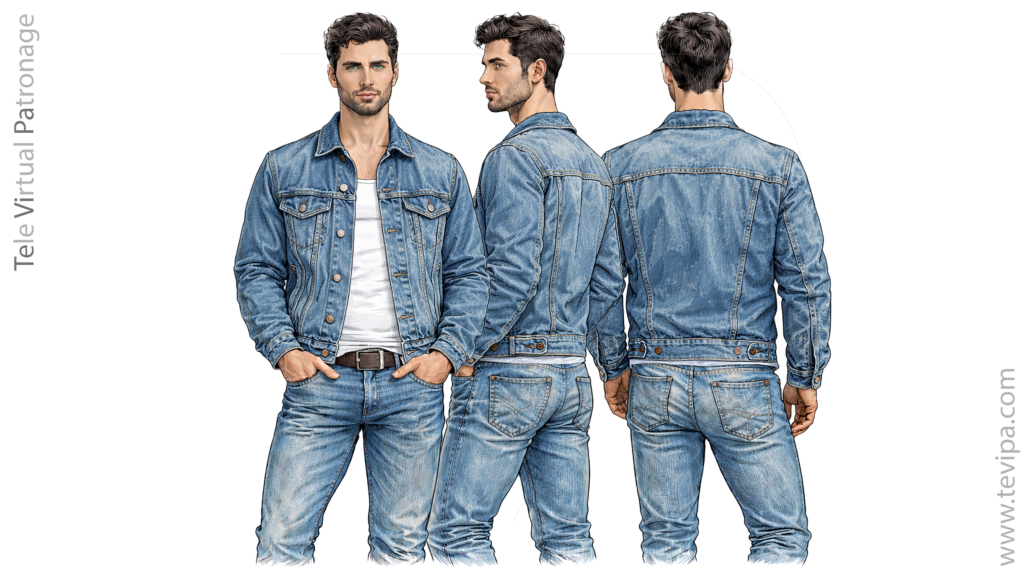
Structure and durability define it.
The trucker comes from workwear.
It uses a clear construction, with a yoke and visible seams.
In patternmaking terms, it builds a straight or slightly fitted silhouette, without elastic elements.
The trucker does not adapt immediately — it shapes itself over time on the body.
The varsity
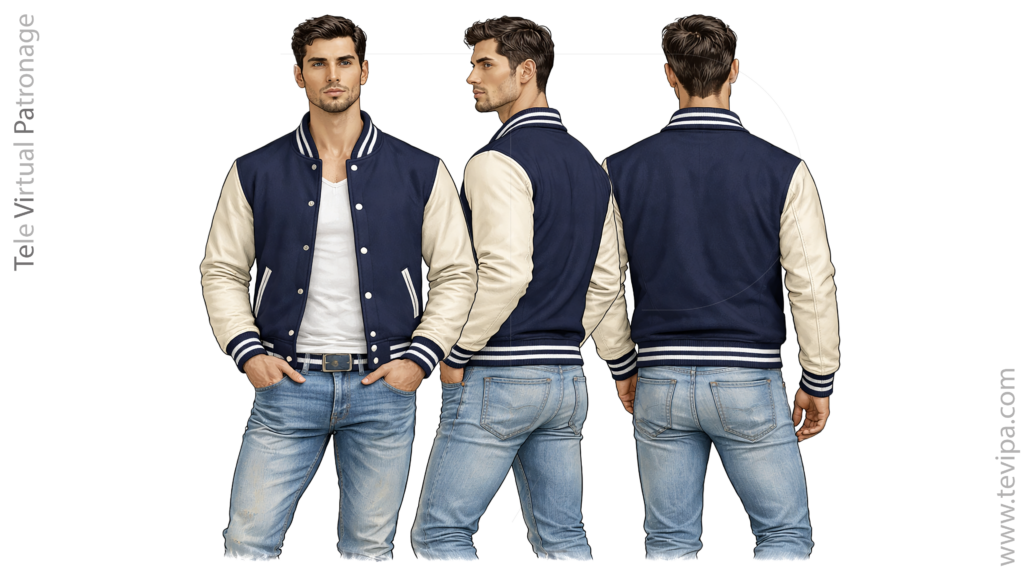
Identity and representation define it.
The varsity comes from academic environments.
It combines materials and uses ribbing at the collar, cuffs and hem.
In patternmaking terms, it builds a moderately loose silhouette regulated by elastic elements.
It turns the garment into a symbol, not just protection.
Classification of jackets
All these jackets follow different logics. They can be organized as follows:
According to function
- Protección: bomber, aviador, parka
- Technical/sports: windbreaker, track jacket, softshell
- Riding: biker, café racer
- Everyday use: harrington, trucker, varsity
According to construction (patternmaking key)
- Closure: central, asymmetrical, buttons
- Collar: shirt collar, rib, lapel, hood
- Length: short, waist, below hip
- Fit: elastic, belt, straight, technical