The Bucket Hat
Definition, Origin and Etymology
What is the bucket hat?
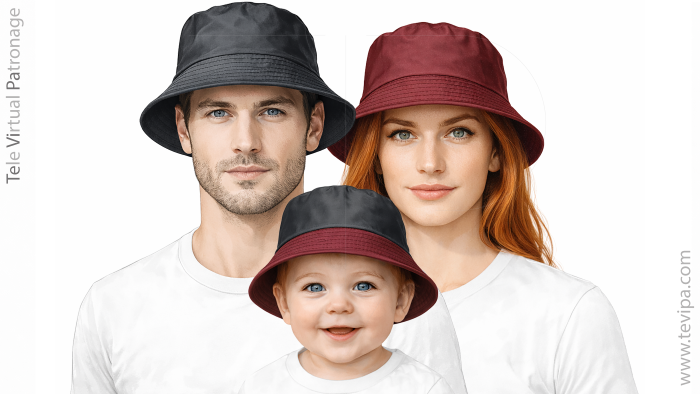
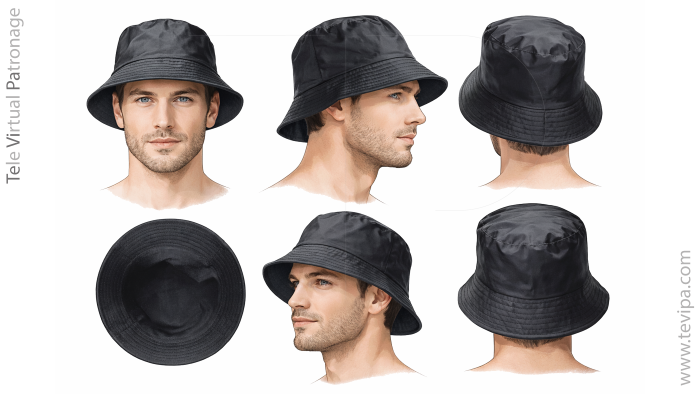
The bucket hat — known as bob in French — is a hat with a soft crown and a downward-sloping brim that runs all around the head.
Its main features are:
- Rounded and flexible crown.
- A cylindrical side band.
- A continuous 360° brim slightly inclined downward.
- A light and foldable construction.
Origin
The bucket hat appeared at the beginning of the 20th century in Ireland and the United Kingdom as a functional garment for fishers and rural workers.
Manufacturers used treated wool or waxed cotton—water-resistant materials that protected against rain and wind without restricting movement.
Its design responds to a utilitarian logic:
- The brim protects without obstructing vision.
- The flexible crown allows folding.
- The closed shape prevents direct rain from entering.
Etymology: why “bucket hat”?
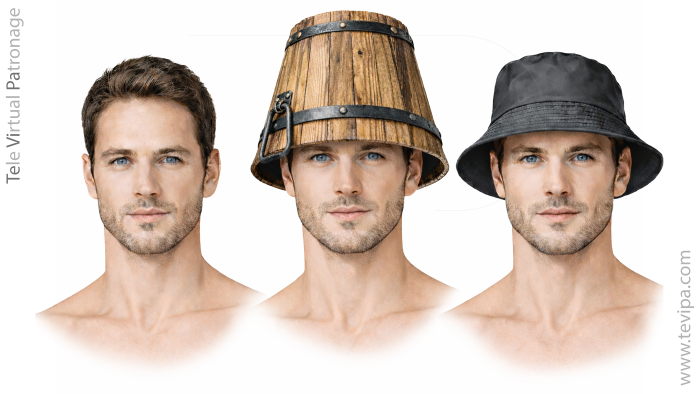
The term refers directly to its shape:
• The cylindrical crown resembles the body of a bucket.
• The downward-sloping brim evokes the upper edge of a bucket or container.
It is not a sophisticated metaphor but rather a simple descriptive name.
The term is particularly useful because it describes the basic geometry of the model.n inglesa resulta especialmente útil porque describe su geometría básica del modelo.
Current importance in fashion

The bucket hat has moved beyond its original function and now occupies a central place in contemporary fashion.
During the 1980s and 1990s, urban culture and hip-hop adopted the bucket hat and turned it into an icon of streetwear.
Today it appears in:
- • Luxury collections
- • Sportswear
- • Minimalist designs
- • Technical waterproof versions
Several factors explain its continued relevance:
- • Formal versatility
- • Volumetric reinterpretation of proportion
- • A structurally neutral form that allows experimentation with proportions
- • Adaptability across all ages
Its apparent simplicity hides a precise geometric structure, which makes it an interesting object both for design and for pattern making.sde el patronaje.
Measurements for the bucket hat
1) Required body measurements
This pattern uses centimeters as the unit of measurement.
Head circumference (C)
This measurement is essential.
Measure it where the hat will sit: above the eyebrows and ears.
It should be snug but not tight.
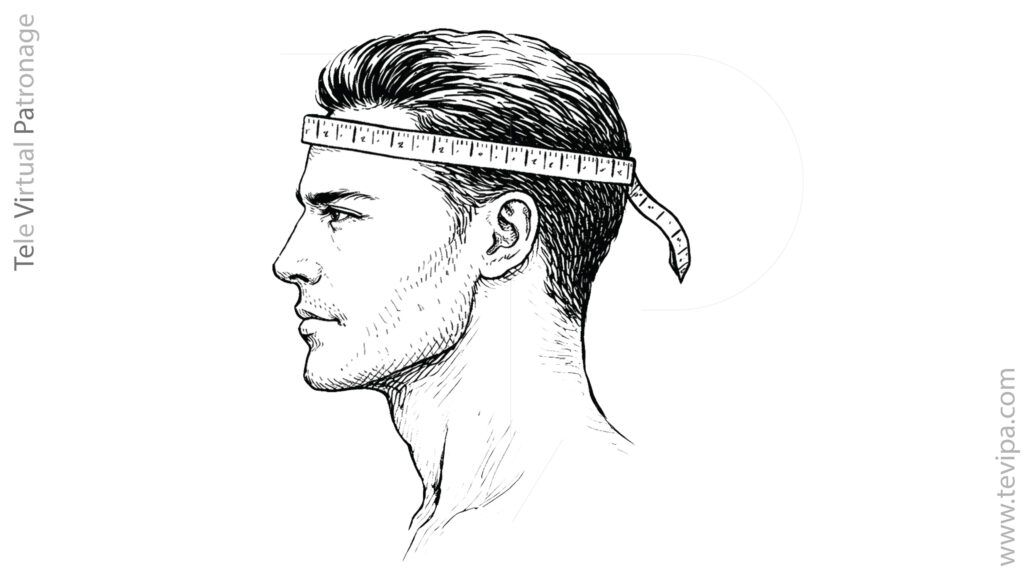
Ease (E):
Ease adds extra width to the actual circumference to ensure comfort.
The required ease may increase depending on the thickness of the fabric.
It also provides construction tolerance for the garment measurements. Calculate the pattern circumference (Cp) as:
The value of ease is not fixed for all ages.
It varies according to:
- • the age group
- • cranial volume
- • the stability of the fabric used for the garment
The table attached to this post lists the recommended values for each size.
Cranial Ovality Index (IOC)
This index is not essential for constructing the pattern, but it helps when the design requires an elliptical crown closer to the anthropometric shape of the head.
Calculate the Cranial Ovality Index (IOC) by dividing the maximum width of the head (b) by the maximum length (a).
IOC = (width / length)
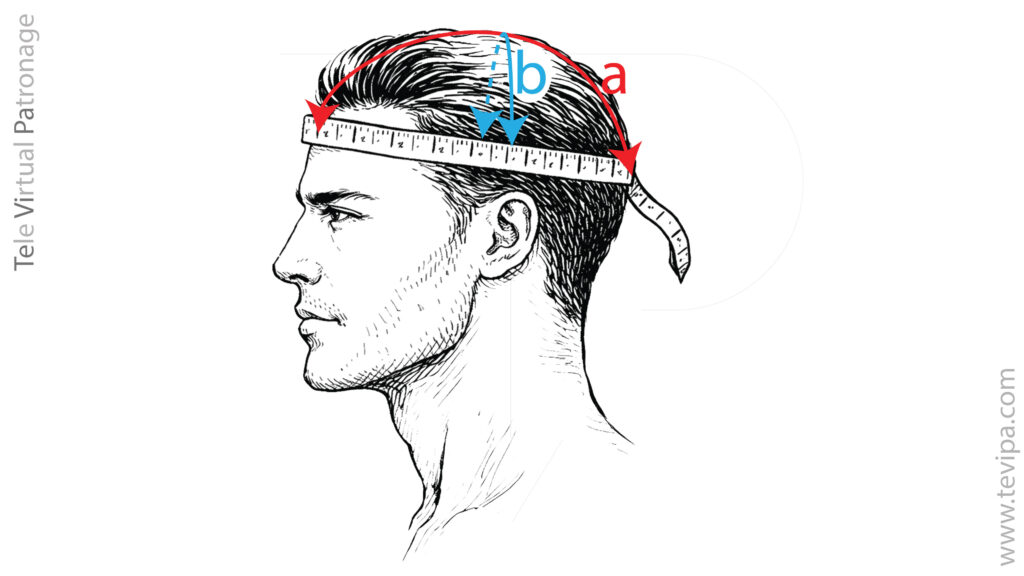
Length refers to the maximum distance from the forehead to the back of the head.
Width refers to the maximum distance from side to side, that is, the maximum width the hat must cover.
These two measurements allow the pattern to adjust so that the top crown follows an ellipse closer to the natural cranial shape.
If you do not take these measurements, use the approximate IOC indicated in the bucket hat table for the corresponding age group.
The table attached to this post lists the indices.
2) Circumference range from baby to adult
The base table covers a range from newborns, whose head circumference measures between 34 and 35 cm, to large adult sizes, whose head circumference measures between 61 and 62 cm.
We distinguish the following size groups:
- • Newborn (0 m)
- • 3, 6 and 12 months
- • 2 and 4 years
- • 6–7 years
- • 10 years
- • 13–14 years
- • Adult sizes S/M, L and XL
Hat sizing usually follows head circumference, but this system keeps age ranges for greater clarity. Only adult sizes use the standard designations S/M, L and XL.
Technical description of the pattern pieces
The bucket hat structurally consists of three main pieces and, depending on the finish, one or several auxiliary elements.
From the pattern-making point of view, its logic is clear and modular.
2.1. Top crown
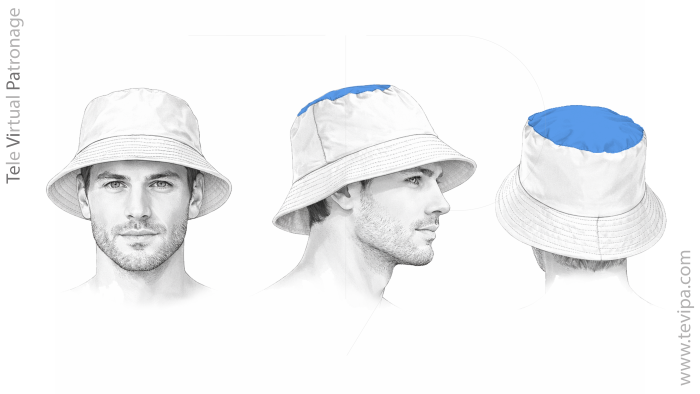
The geometry of this piece follows an ellipse.
Its functions are:
- • Close the upper volume
- • Define the anatomical ovality
- • Adapt the hat to the cranial circumference
Technical characteristics:
- • The pattern circumference (Cp) determines its dimensions.
- • The shape is not purely circular but elliptical.
- • The major axis (anteroposterior) and minor axis (bilateral) follow the Cranial Ovality Index (IOC).
Possible cutting options:
- • One single piece
- • Two halves with a central seam
- • Four panels (less common in classic bucket hats)
The crown ensures that the hat sits correctly on the head.
2.2. Side band (body or crown band)

Its shape comes from a rectangular pattern piece.
It sets the height of the hat, connects the crown to the brim, and defines the vertical volume of the bucket hat.
Technical characteristics of the side band:
The length of the piece equals the head circumference plus ease, that is, the pattern circumference (Cp). The height of the band corresponds to the lateral height of the skull, which may increase according to stylistic choices.
It may have:
- • one seam, usually placed at the back of the hat
- • two seams, usually placed on the sides
This piece determines the visual proportion of the hat.
2.3. Brim
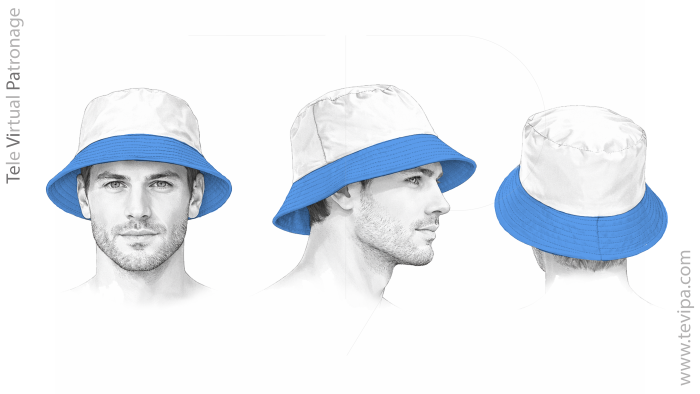
Geometry: circular ring modified by a sector.
Function:
Sun protection
Aesthetic definition of the model
Structural stability of the lower edge
Technical characteristics:
Construct the brim by opening a fixed sector of θ = 46° in the inner circumference. The seam length between brim and band must equal Cp, distributed along an arc of:
Therefore, calculate the inner radius of the brim not as Cp/(2π), but as:
Obtain the outer radius by adding the brim width (B) according to the design:
Control the aesthetic gesture (more brim in front and less behind) by vertically offsetting the centre of the outer sector.
The brim defines the character of the bucket hat.
2.4. Complementary elements
Depending on the version, the hat may include:
Full lining. The lining reproduces the crown and the band, but uses slightly smaller dimensions so that, once assembled, it pulls inward and prevents wrinkles.
Inner sweatband. Metal ventilation eyelets.
2.5. Relationship between pieces
The system is closed:
The crown must match the upper perimeter of the band exactly.
The base of the band must match the inner perimeter of the brim exactly. The inner perimeter of the brim must equal Cp.
Tabla
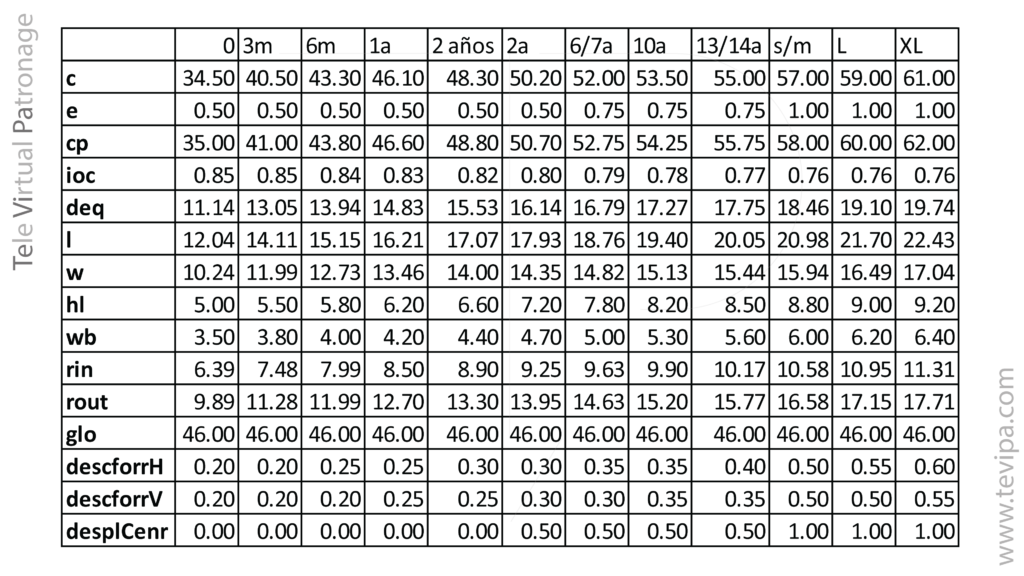
c: head circumference
e: ease
cp: garment circumference
ioc: cranial ovality index
deq: equivalent diameter
l: major axis
w: minor axis
hl: lateral height
wb: brim width
rin: inner radius
rout: outer radius
glo: sector angle (degrees)
descforrH: horizontal lining reduction
descforrV: vertical lining reduction
desplCenr: centre displacement
Construction process
All calculations required to construct the bucket hat appear in the previous table.
Drafting the crown
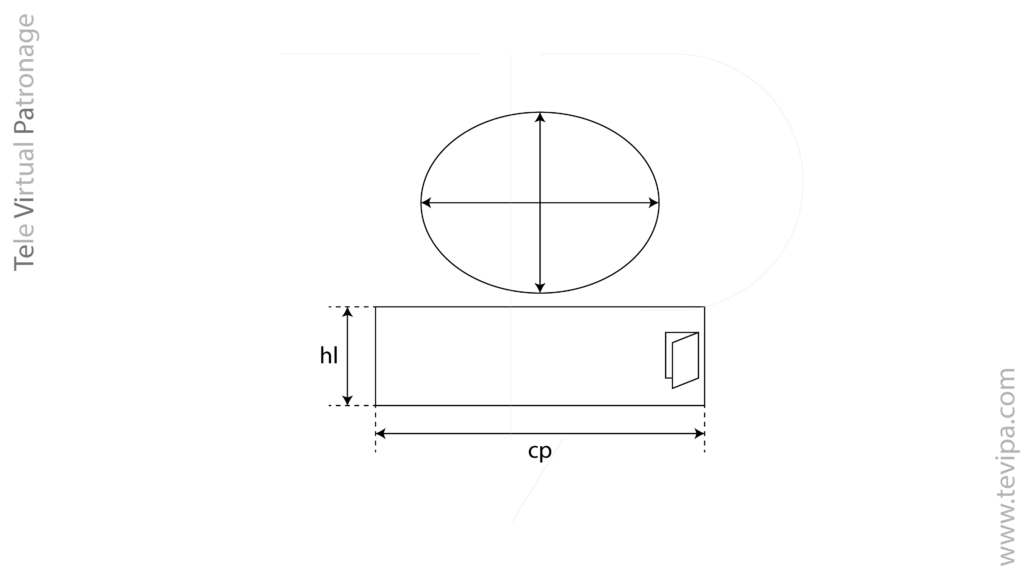
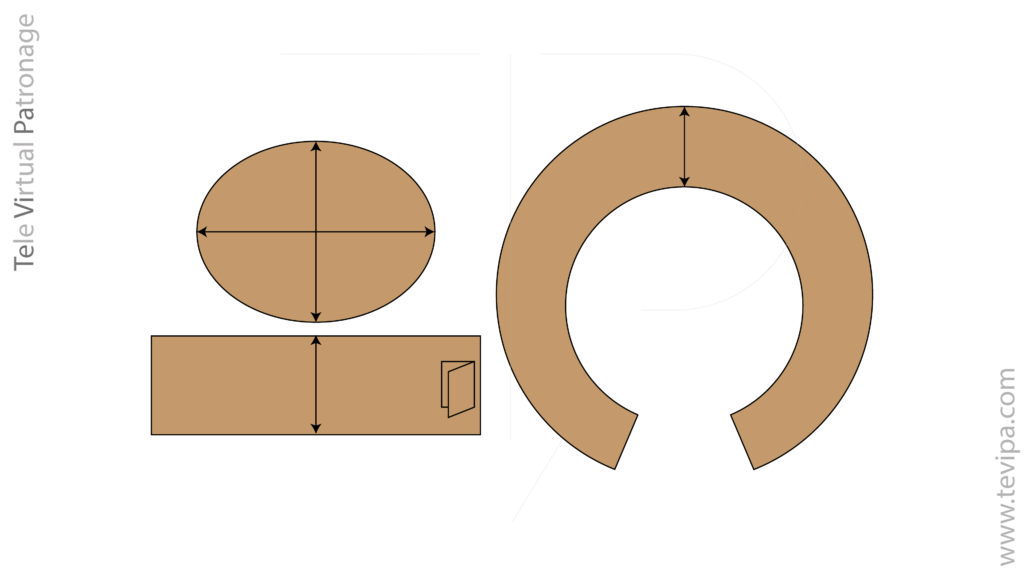
Draw an ellipse with axes l and w.

Drafting the side band
Draw a rectangle whose base equals half the garment circumference (head circumference C plus ease E).
Set its height equal to the lateral height (hl).
Because only half the circumference is drawn, add a fold mark to obtain the full piece.
Drafting the inner radius (rin)
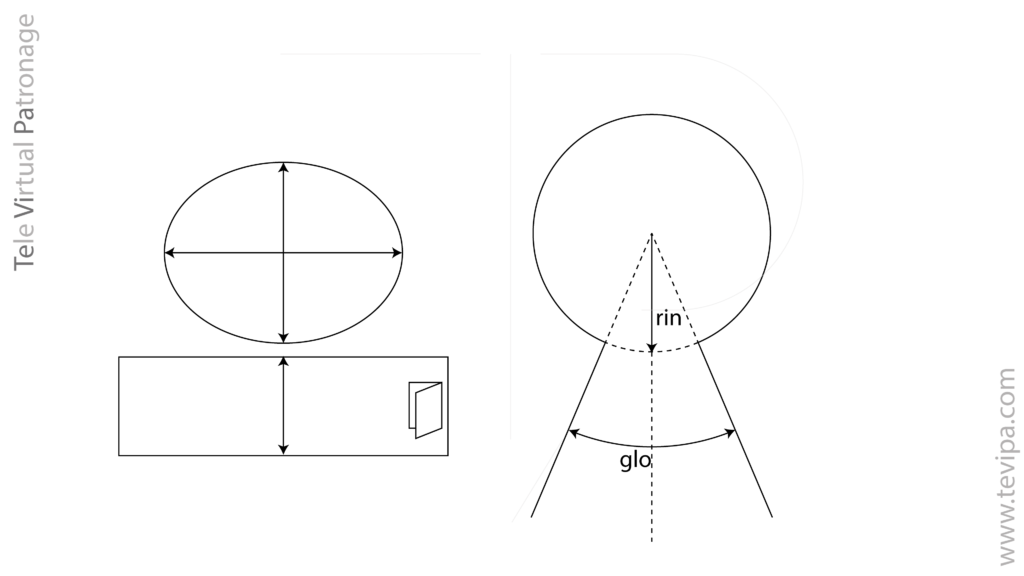
Draw a circle. From the centre, draw an isosceles triangle with the sector angle (glo).
Mark the sides of the future circular ring.Drafting the inner radius (rin)
Determining the outer radius (rout)
Calculate the value of the outer radius and determine the offset of the centre of the outer circumference.
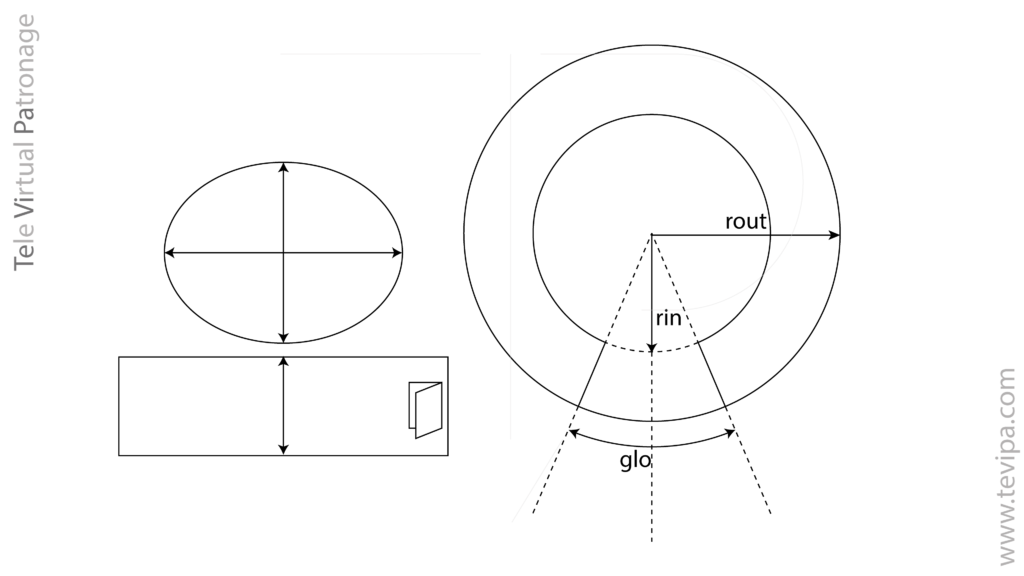
Then shift this centre vertically from the centre of the first circle according to the value indicated in the table.

The drafting of the main pieces of the bucket hat is now complete.
Adding seam allowances
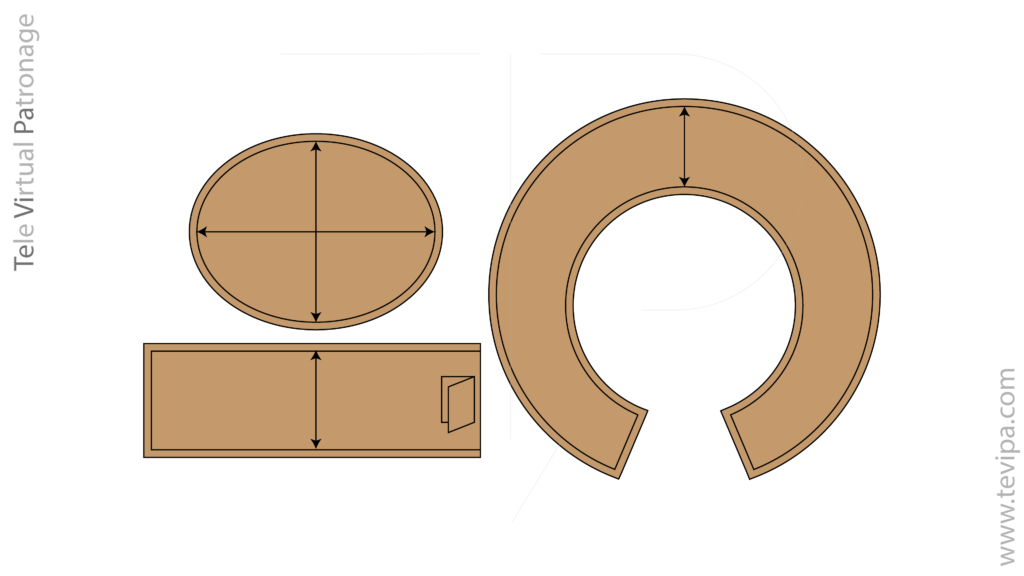
Add the seam allowances.
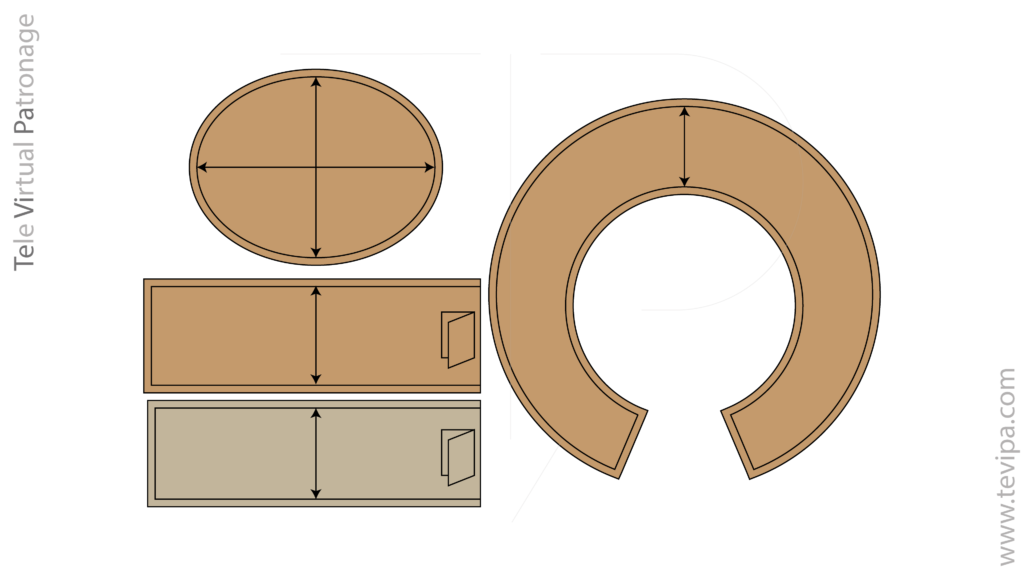
If the hat includes a lining, reduce the values indicated in the table for the side band so that the finished hat does not create wrinkles on the outside.
Bucket rag
Custom pattern