• Two-piece tracksuit trousers pattern

    Two-piece sweatpants pattern built from the same measurements and ease as the one-piece version, but with a different leg construction.
    The grainline placement on front and back pieces allows a clearer definition of the lower leg areas and separates the side seams.
    A widely used base for casual trousers, sportswear, bermudas and shorts.
  • Tear-away pants

    Tear-away pants are a transformation of one-piece sweatpants featuring full lateral openings with snap fasteners. Used in sports, medical contexts and stage performances, they allow fast removal without taking off footwear. This post explains their construction logic and practical limits from a pattern-making perspective.

  • One-piece tracksuit trousers pattern

    This article explains the one-piece tracksuit trouser pattern, a simple and loosely structured construction used for casual, sports and functional garments. It outlines its main characteristics, typical fabrics and waist positioning.
    The text details the measurements required for drafting, focusing on hip width and seat rise, and explains how all other dimensions are derived. Differences in proportions and drafting logic compared to more tailored trousers are clearly described.
    Special attention is given to horizontal and vertical ease, their relationship and their influence on the rise, crotch and leg opening. The article also clarifies grainline placement and explains why this pattern is suitable for both male and female morphologies.

  • Transforming the straight tailored skirt block into a natural-flare skirt

    A natural-flare skirt is created by closing the darts in a tailored skirt block, transforming their volume into a gentle opening at the hem. The result is a fluid, balanced silhouette that remains clean and structured. It’s an easy, elegant transformation suitable for everyday skirts, formal garments and even bridal designs.

  • Base Pattern of the Straight Tailored Skirt

    Learn the complete logic behind the straight tailored skirt, one of the essential patterns in geometric patternmaking. This guide explains the required measurements, the structural principles of the draft, and the differences between male and female morphology, illustrated with a hybrid figure created specifically for this project. It includes a detailed drafting video, professional tips, and recommended tools for both workshop and digital patternmaking.

  • Geometry in Pattern Making – The Skirt

    Geometric pattern making relies on simple shapes —circles, triangles, rectangles— to build garments with mathematical precision and a clear method.
    In this article, learn how to calculate and draw a circle skirt using the gardener’s compass, from formulas and proportions to practical drafting.
    Perfect for fashion students and professionals who value precision and method.

  • The Dictatorship of Fashion: The Body Against the Number

    Fashion no longer dresses bodies —it organizes desires.
    This TeleVirtualPatronage manifesto denounces the shift from craft to spectacle, from tailoring to algorithms, from body to number.
    Bobo, the god-logo, mirrors the system’s sickness.

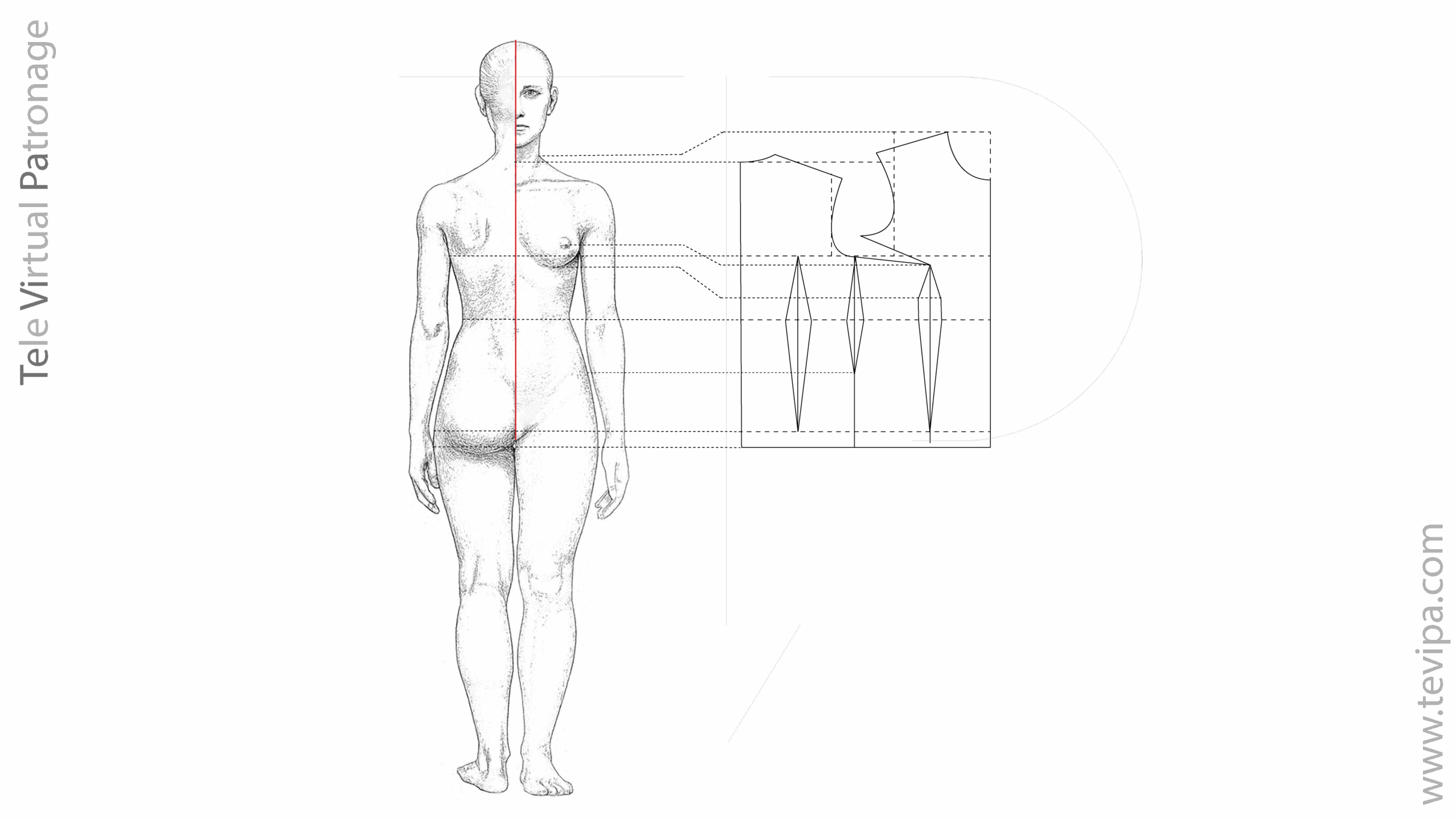
  • Measurements 3 – Female front bust

    This article explains how to measure the front bust height on the female body and how to calculate the vertical bust development, a key parameter in pattern making. The differences between front and back bust measurements define the body shape and help build balanced, accurate patterns