
One-piece tracksuit trousers pattern
Main characteristics of one-piece tracksuit trousers
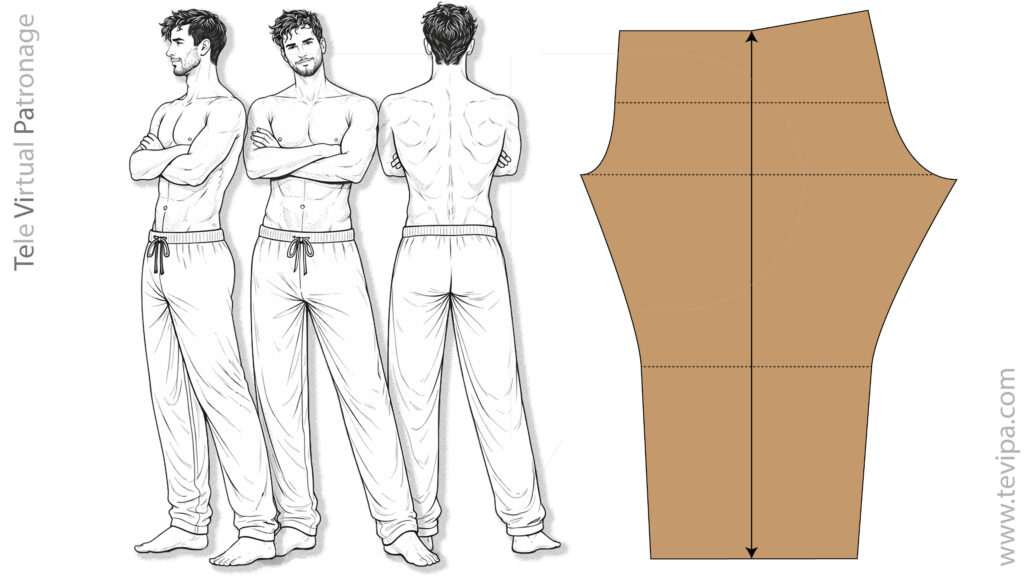
One-piece tracksuit trousers have a loosely structured shape, whereas two-piece tracksuit patterns define the leg shape more clearly.
Patternmakers use the basic one-piece tracksuit trouser pattern for casual, sports and workwear garments, as well as for boxers, pajama trousers and outerwear, such as waterproof trousers or rain pants.
This pattern serves as the base from which other, more structured types of trousers develop, such as jeans.
Manufacturers generally make this type of trouser in knitted fabrics, which allows them to avoid precise anatomical fitting.
Designers usually position this type of trouser between 2 and 4 centimeters above the actual waistline.
Measurements required drafting this base
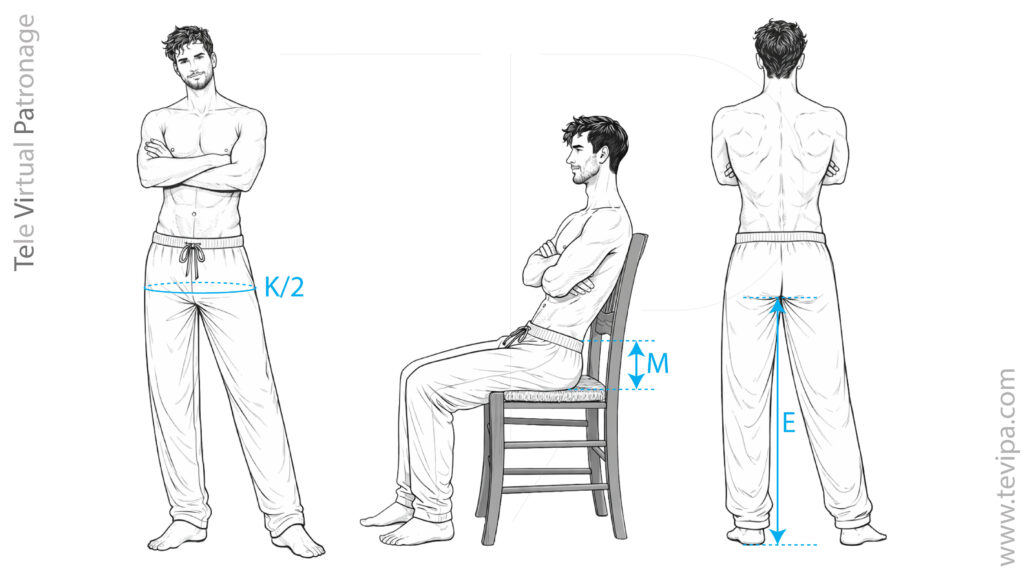
To draft this pattern, patternmakers use the half-hip girth to define the widths, and the seated crotch rise and the inseam length to define the lengths.
This type of trouser adjusts at the waist by means of elastic and/or a drawstring. Because of this adjustment system, gathers appear at the waist due to the contraction of the elastic or the action of the drawstring. In this type of construction, the exact waistband measurement does not play a decisive role, since the elastic system provides the final adjustment.
Patternmakers derive the other width and length measurements from these base measurements. The method used to derive them differs from that used in more structured garments, both in the general approach and in some of the proportions.
Regarding the proportions used to obtain the derived measurements, patternmakers place the knee position at the midpoint of the inseam length. In more defined garments, they place it at nine sixteenths of the total leg length, that is, at nine sixteenths of the sum of the rise and the inseam length.
Patternmakers mainly use the seated crotch rise in sports garments. During the drafting process, they calculate the hip height from half of the rise.
They do so because they add 2 to 4 centimeters of vertical ease to the rise during drafting, and because taking the rise with the model seated on a horizontal surface inherently increases the measurement.
Different types of ease
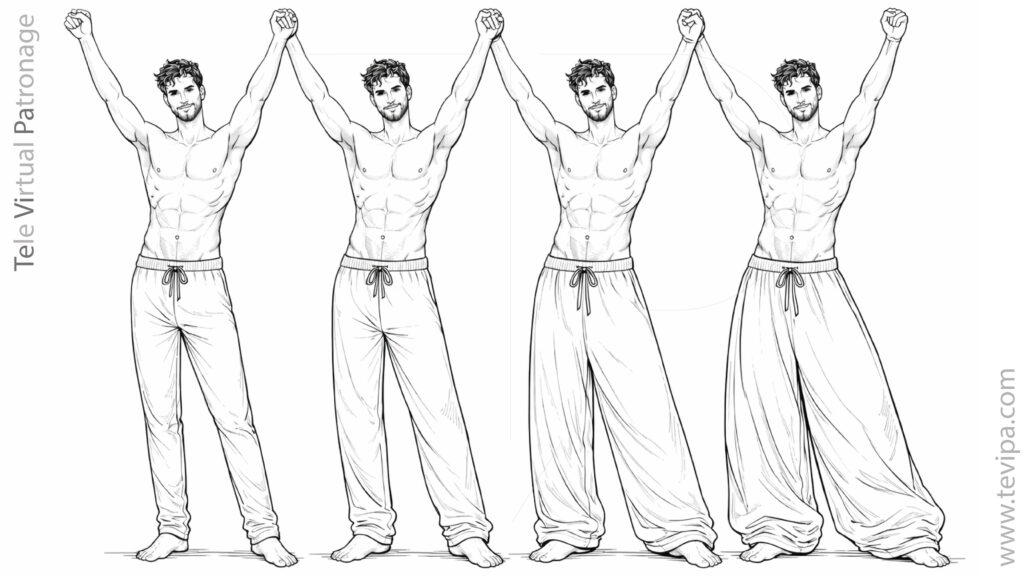
This pattern uses the half-hip girth as its only width measurement, to which patternmakers add horizontal ease.
For trousers with a regular shape, patternmakers recommend adding 3 cm to the half hip, which produces a finished garment 6 centimeters larger than the client’s hip circumference.
For wide trousers, they can add 7 cm to the half hip, which produces a garment 14 centimeters larger than the client’s hip girth.
Patternmakers can calculate the vertical ease of the rise as half of the hip ease, rounded up. That is, with a horizontal ease of 3 cm, they can set a vertical ease of 2 cm; and with a horizontal ease of 7 cm, they can also set a vertical ease of 4 cm.
Patternmakers can increase the back crotch extension by one quarter of the vertical ease of the rise.
Patternmakers set the leg hem width at one third of the hip rectangle, including ease and excluding the crotch extensions. However, the stylist’s or the client’s preference may lead them to vary the trouser hem width.
Grainline in one-piece trousers, side-stripe trousers and jeans
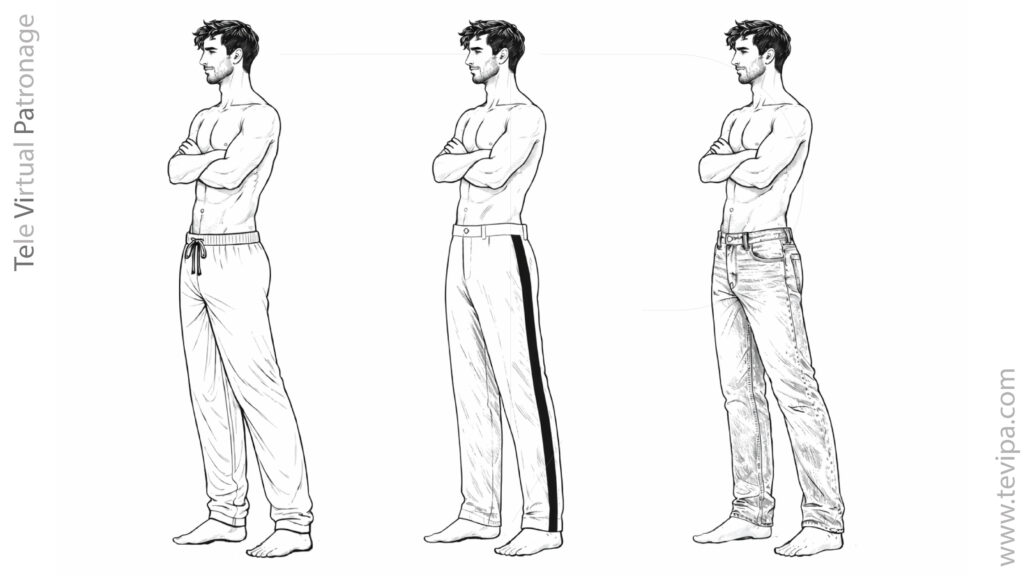
One-piece tracksuit trousers place the grainline along the side seam.
Side-stripe trousers and jeans share the same side seam, which allows patternmakers to consider all three types of trousers as belonging to the same family.
Trousers suitable for both body morphologies
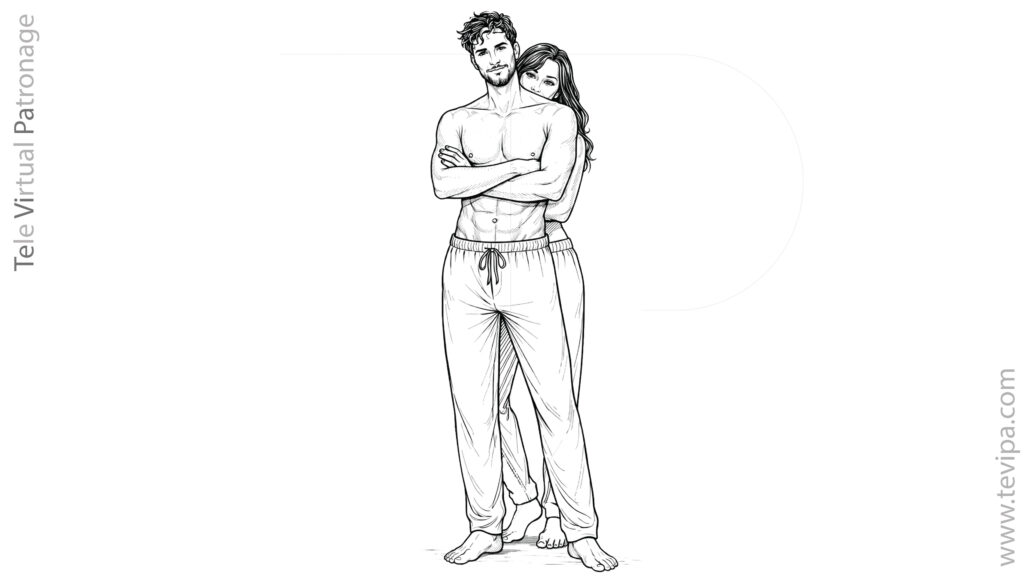
Because patternmakers draft this pattern using the half-hip girth as the only width measurement, they can apply it to both male and female body morphologies.
The only difference appears in the female morphology: because women generally have a smaller waist circumference, the trousers show more gathering at the waist.