
Two-piece tracksuit trousers pattern
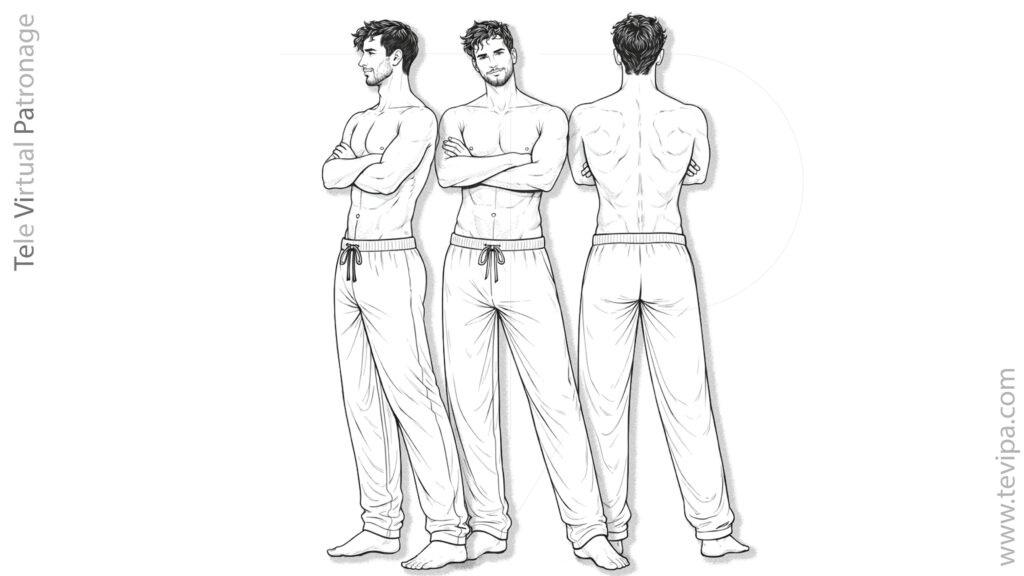
See the post ”One-piece tracksuit trousers pattern”
Similarities and differences between the one-piece and two-piece tracksuit trouser patterns
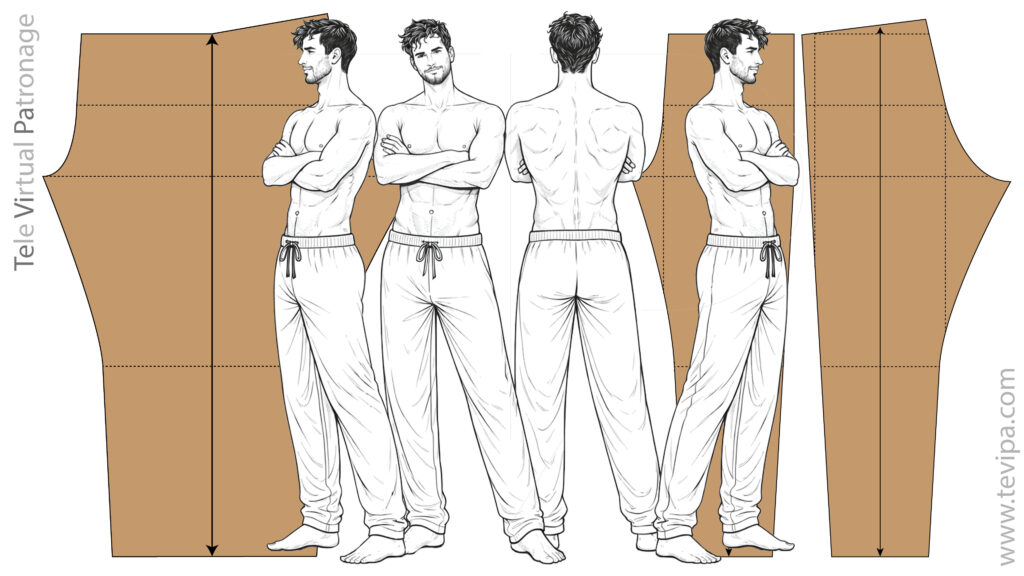
Similarities
Both patterns share the same base measurements, the same ease allowances and, in general, the same construction materials.
The waistband closure, both in one-piece and two-piece trousers, is achieved by means of an elastic waistband and/or a drawstring.
For this reason, regarding measurement taking, ease calculation and waist behaviour, we refer to everything explained in the previous blog post.
Although the two-piece tracksuit trousers allow for better leg shaping, they remain far from the structure of a tailored trouser pattern, even if they may appear similar at first glance.
Differences
The main difference between the two patterns lies in the placement of the straight grain.
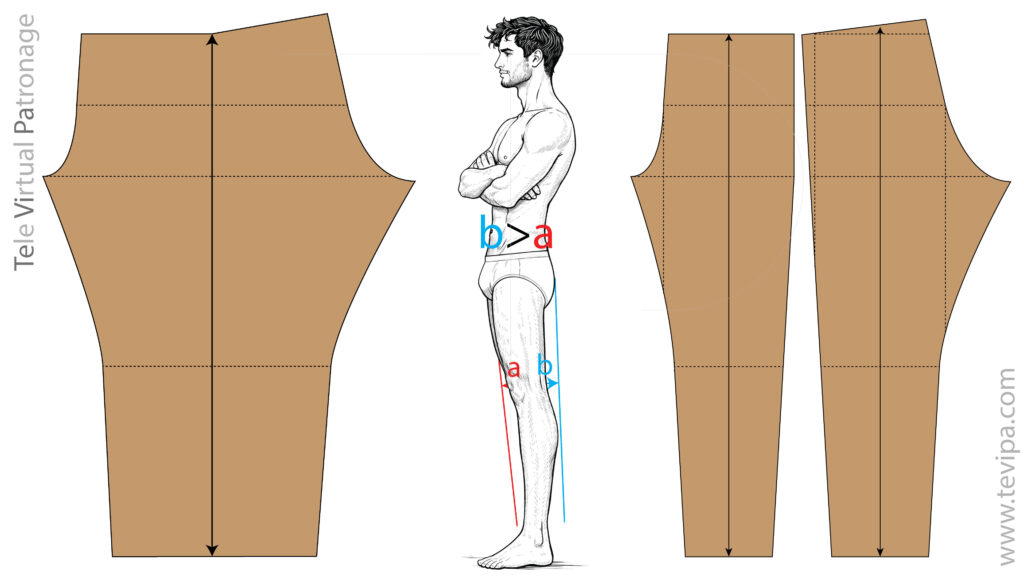
In the one-piece tracksuit trousers, the straight grain is placed along the side line of the base construction rectangle. From this line, both legs are drafted.
In the two-piece tracksuit trousers, the straight grain is positioned at the centre of the rectangle corresponding to the front piece. The straight grain of the back piece has exactly the same placement. As a result, the front and back legs are drafted on either side of their respective straight grains.
This layout makes it possible to clearly differentiate the lower parts of the leg, from the knee to the ankle. In the front piece, the leg mainly covers the shin area, while the back piece must wrap around the calf, which is much more voluminous. For this reason, in this type of pattern the back leg is always wider than the front leg.
This construction clearly differentiates the side seams of the front and the back. While the back line remains completely straight, the front line is broken at the crotch area.
Having a side seam also makes it possible to incorporate, in garments derived from this pattern, not only patch or flap pockets, but also slanted pockets and pockets integrated into the seam.
The greater volume of the buttocks, located at the back hip and clearly larger than the front hip volume, is not taken into account in this pattern. This is due both to the materials used and to the elastic or drawstring waist closure system.
Importance of this base
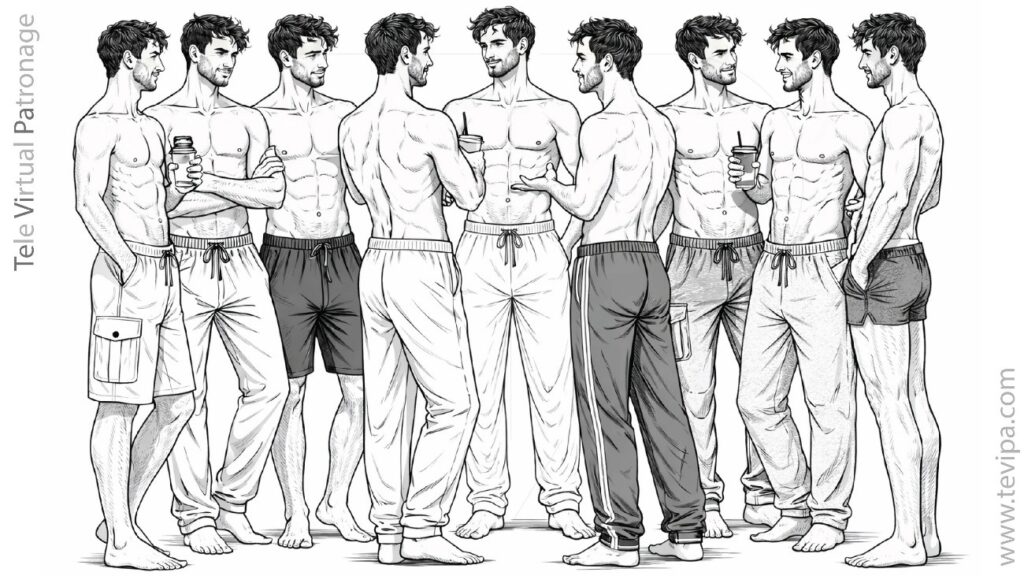
Although this is not a base that strictly follows the anatomical structure of the leg, it is a perfectly valid and widely used pattern.
Many casual trousers, bermudas and shorts are developed from this pattern, making it a fundamental base in casual and sportswear pattern making.